Back in December 2024, I wrote about macvendors.co.uk, a small tool I had put together for looking up the registered vendor behind a MAC address. The main reason for building it was fairly simple: I wanted to paste in a large list of addresses, get useful results back, and download them as a CSV.
The original single-address lookup and bulk lookup are both still there, but quite a lot has changed behind them since that first post.
More complete IEEE data
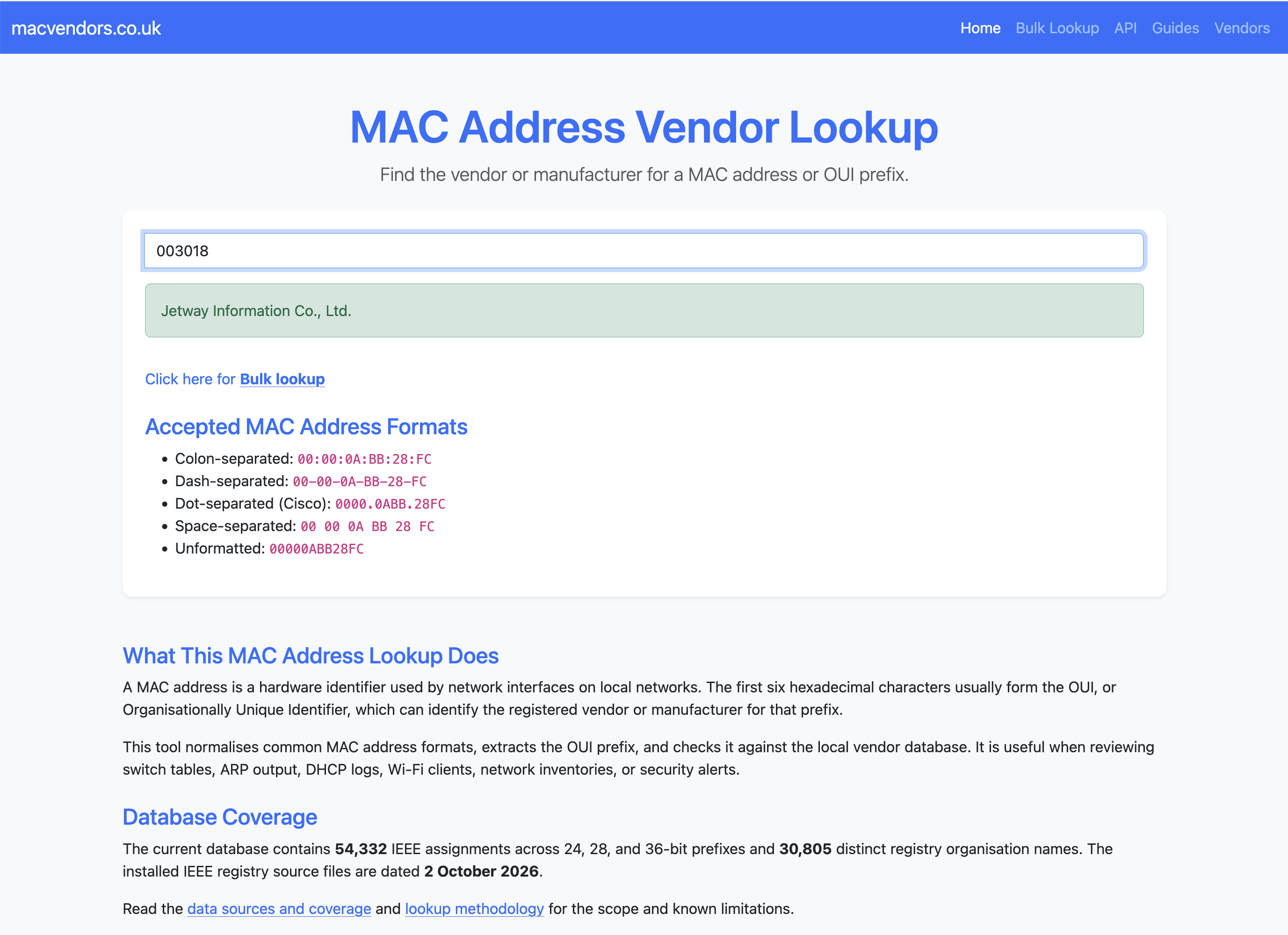
The first version worked with the familiar 24-bit OUI prefix: the first six hexadecimal characters of a MAC address. That remains useful, but it is no longer the whole picture.
The lookup database now includes the IEEE’s 24-bit MA-L assignments, 28-bit MA-M assignments and 36-bit MA-S assignments. When an address is entered, the site checks the most specific matching assignment first. This matters because a smaller block can be registered to a different organisation within a larger allocation, and looking at only the first six characters can therefore produce a less precise answer.
At the time of writing, the site holds more than 54,000 IEEE assignments covering over 30,000 distinct registry organisation names. The source data is refreshed automatically from the IEEE Registration Authority, and the date and current record totals are shown on the site rather than hidden away in the background. There is also a new data sources page explaining exactly which registries are used.
Better handling of private and randomised addresses
Modern phones, laptops, virtual machines and other devices often use locally administered MAC addresses. Wi-Fi address randomisation is probably the example most people will encounter.
These addresses cannot reliably identify the manufacturer from their prefix, so the lookup now checks the universal/local bit and reports Locally administered where appropriate. That is a more useful answer than presenting an accidental prefix match as if it identified the hardware.
The new lookup methodology page explains this process, including the difference between the local bit and the separate multicast bit. It also explains an important limitation: a registry result tells you which organisation holds an assignment, but it does not prove the model, owner or current operator of a device.
A more useful bulk lookup
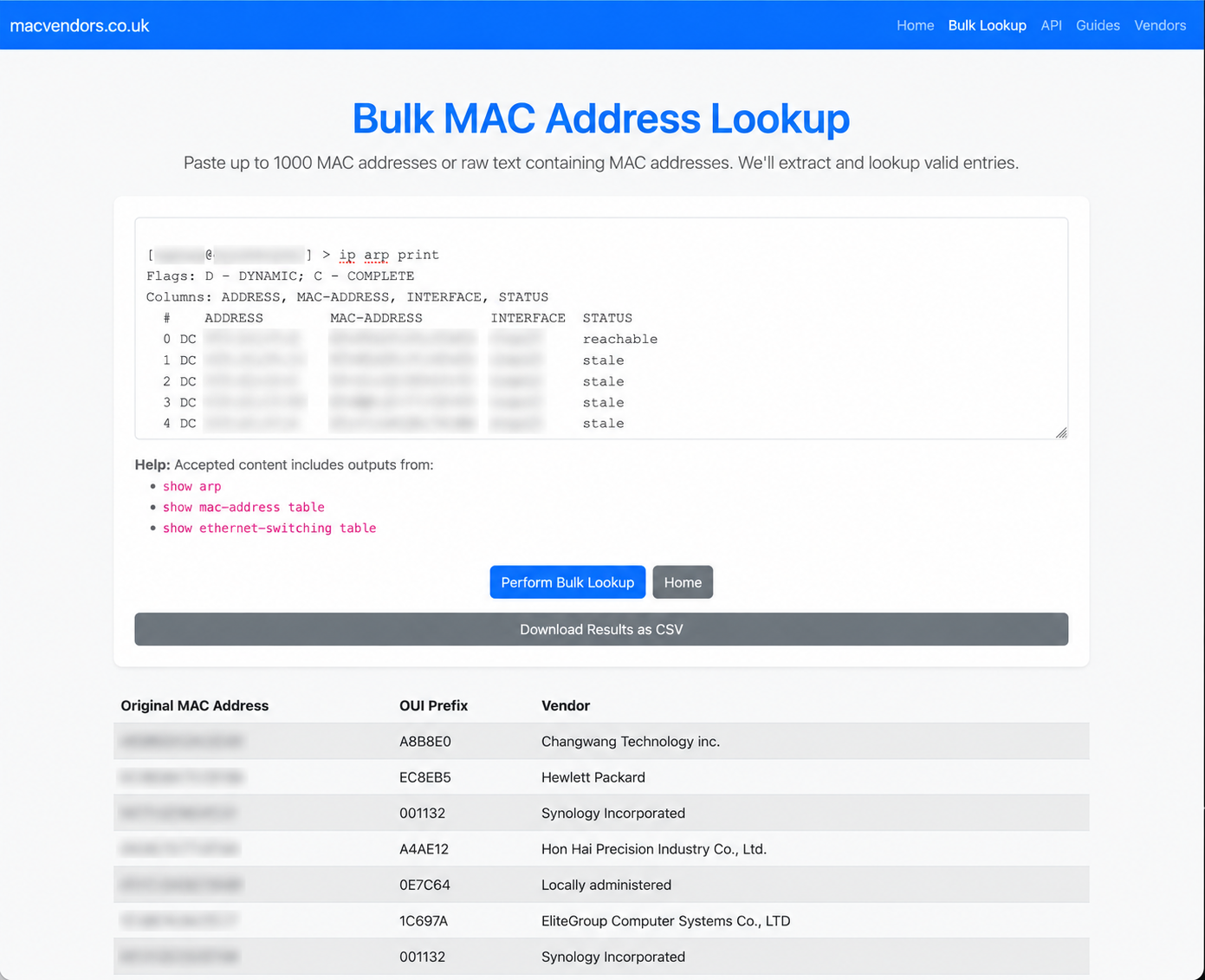
The bulk MAC address lookup now accepts up to 1,000 addresses at a time. You do not have to clean the input into a neat list first: it can extract recognised MAC addresses from pasted text such as show arp, show mac-address table and show ethernet-switching table output.
Results can still be downloaded as CSV, which was the feature that prompted me to build the site in the first place.
Browse the registry as well as searching it
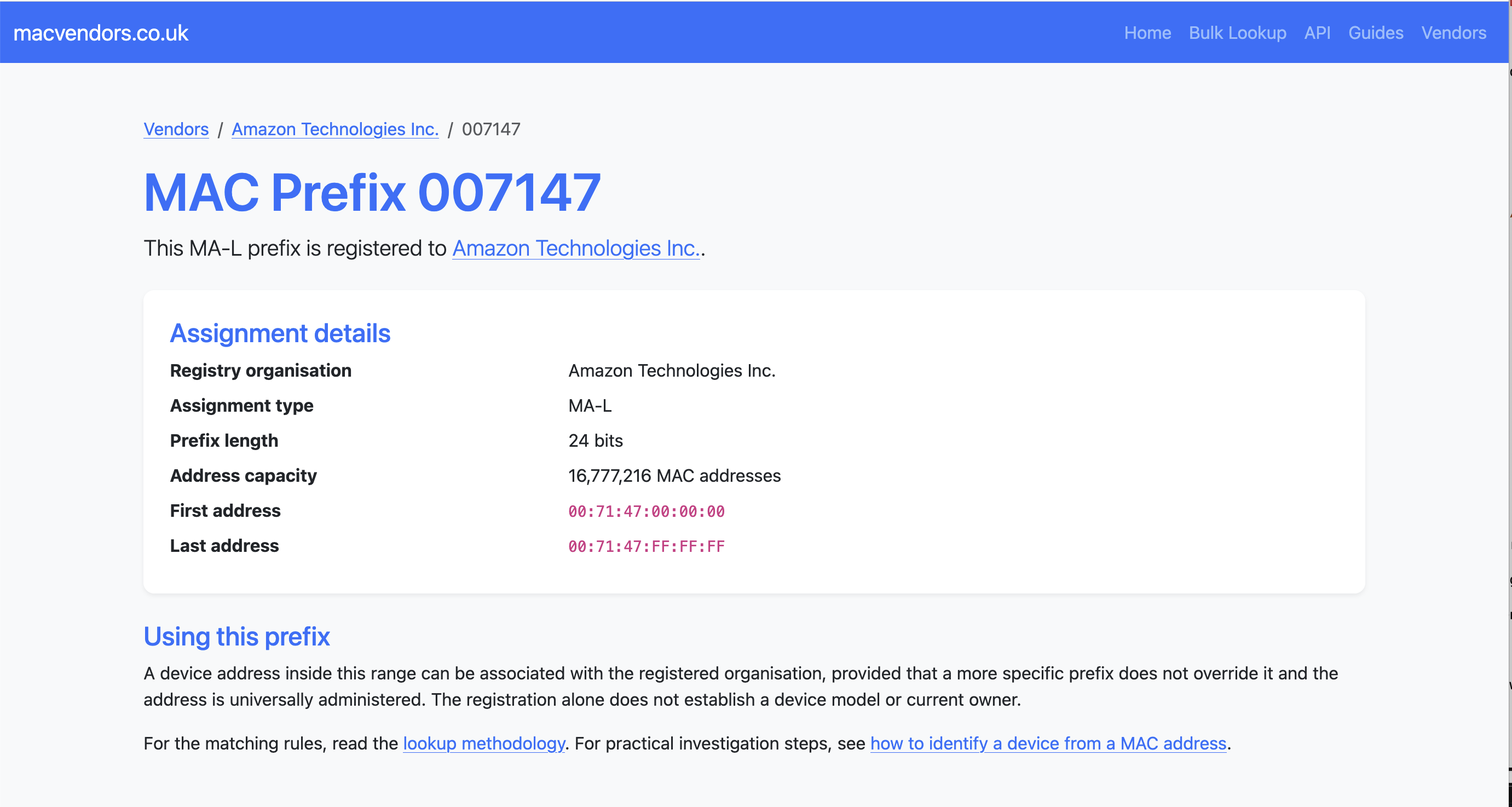
There is now a searchable vendor directory. It lists registered organisations and lets you open a vendor to see its MA-L, MA-M and MA-S assignments. Individual prefix pages show the assignment type, prefix length and registered organisation.
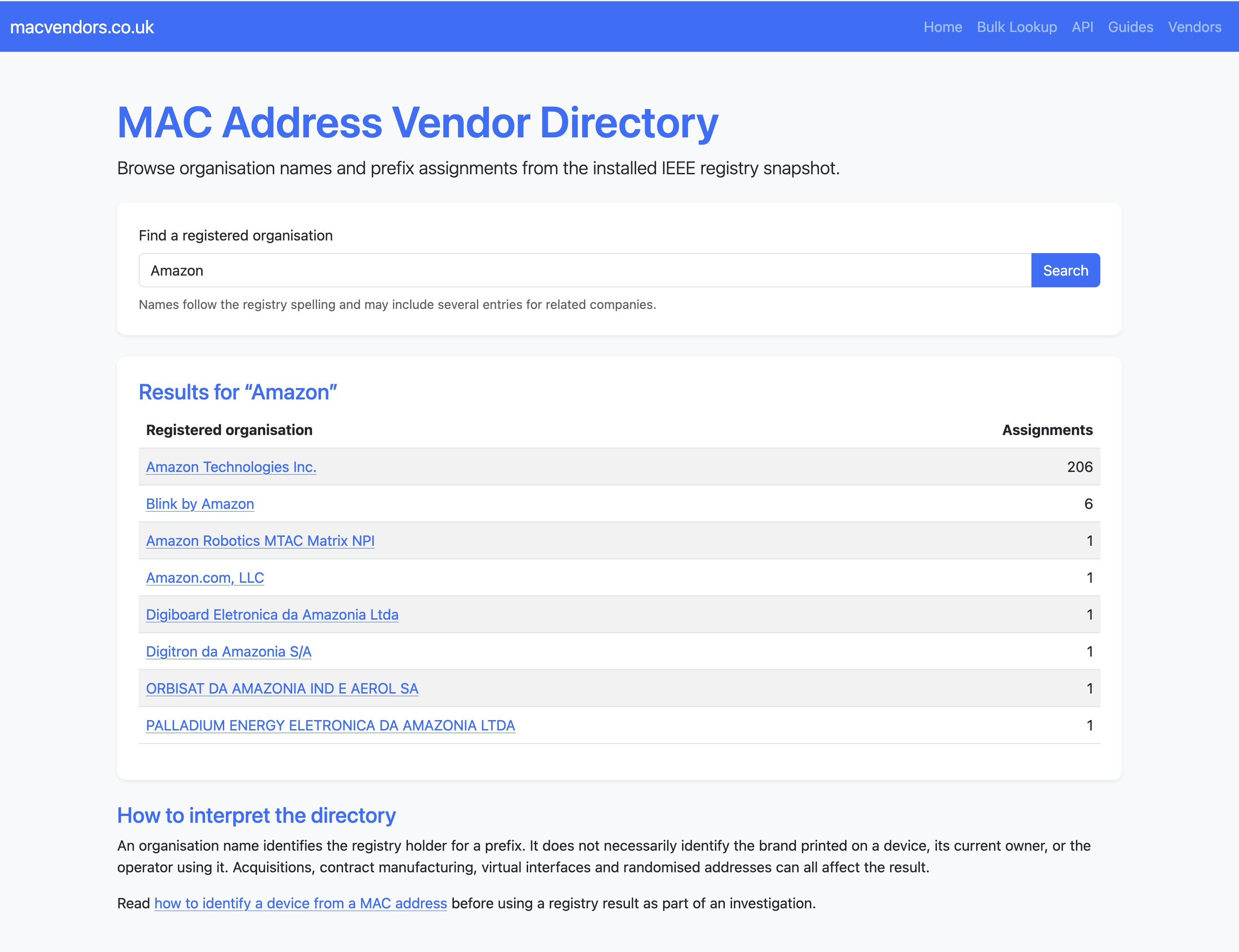
This is handy when you know the company name and want to inspect its allocations, rather than starting with a complete MAC address. It is also a good illustration of why one company may appear under several related or historic registry names.
New practical guides
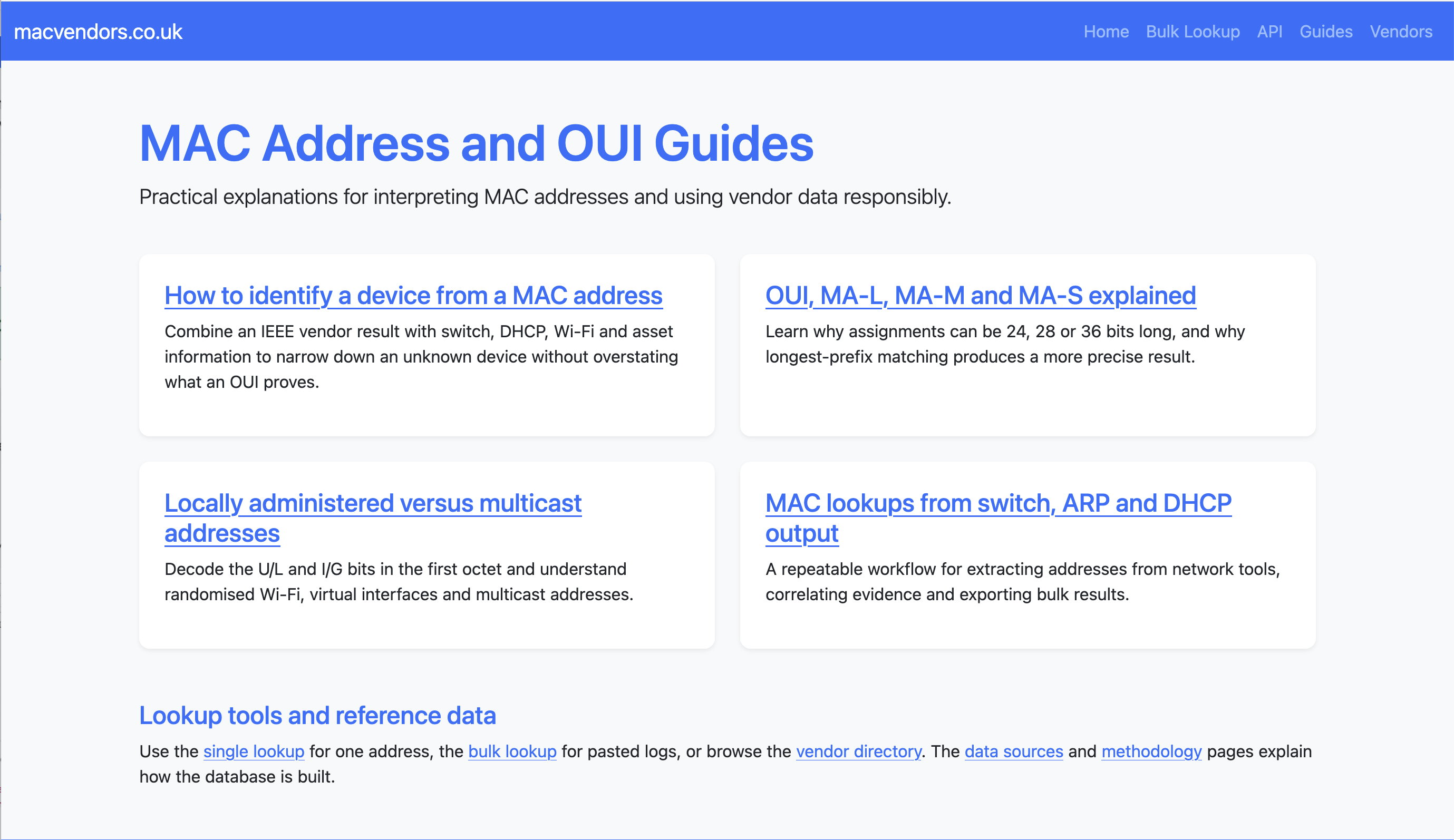
A vendor name is usually only one clue in identifying something on a network, so I have added a small MAC address and OUI guides section. It currently covers:
- how to identify a device by combining a vendor result with switch, ARP, DHCP, Wi-Fi and inventory data;
- the difference between OUI, MA-L, MA-M and MA-S assignments;
- locally administered and multicast address bits; and
- working with MAC addresses found in switch, ARP and DHCP output.
The aim is to explain what the result actually means and how to use it without claiming that a prefix alone can identify an exact device.
The API is still in the same place
The public MAC address lookup API remains available at:
https://macvendors.co.uk/api/mac_lookup/<mac_address>Existing clients do not need to change their URL or the JSON response they expect. Behind the scenes, the API now keeps the lookup registry in memory and runs separately from the public web interface. That gives both parts of the service more room to handle busy periods without changing how the API is used.
The documentation now includes command-line, Python and PowerShell examples, along with a downloadable OpenAPI 3.1 description for tooling which can consume it.
Fair-use protection is also in place so that an unusually heavy client is less likely to affect everyone else. If the service asks a client to slow down, it returns the standard HTTP 429 Too Many Requests response.
The original idea has not changed: paste in a MAC address, or a great heap of them, and get a useful answer without any fuss. The site now has fresher and more complete source data, handles modern address behaviour more honestly, and provides a few more ways to explore and understand the results.
Have a look at macvendors.co.uk and, as ever, enjoy!